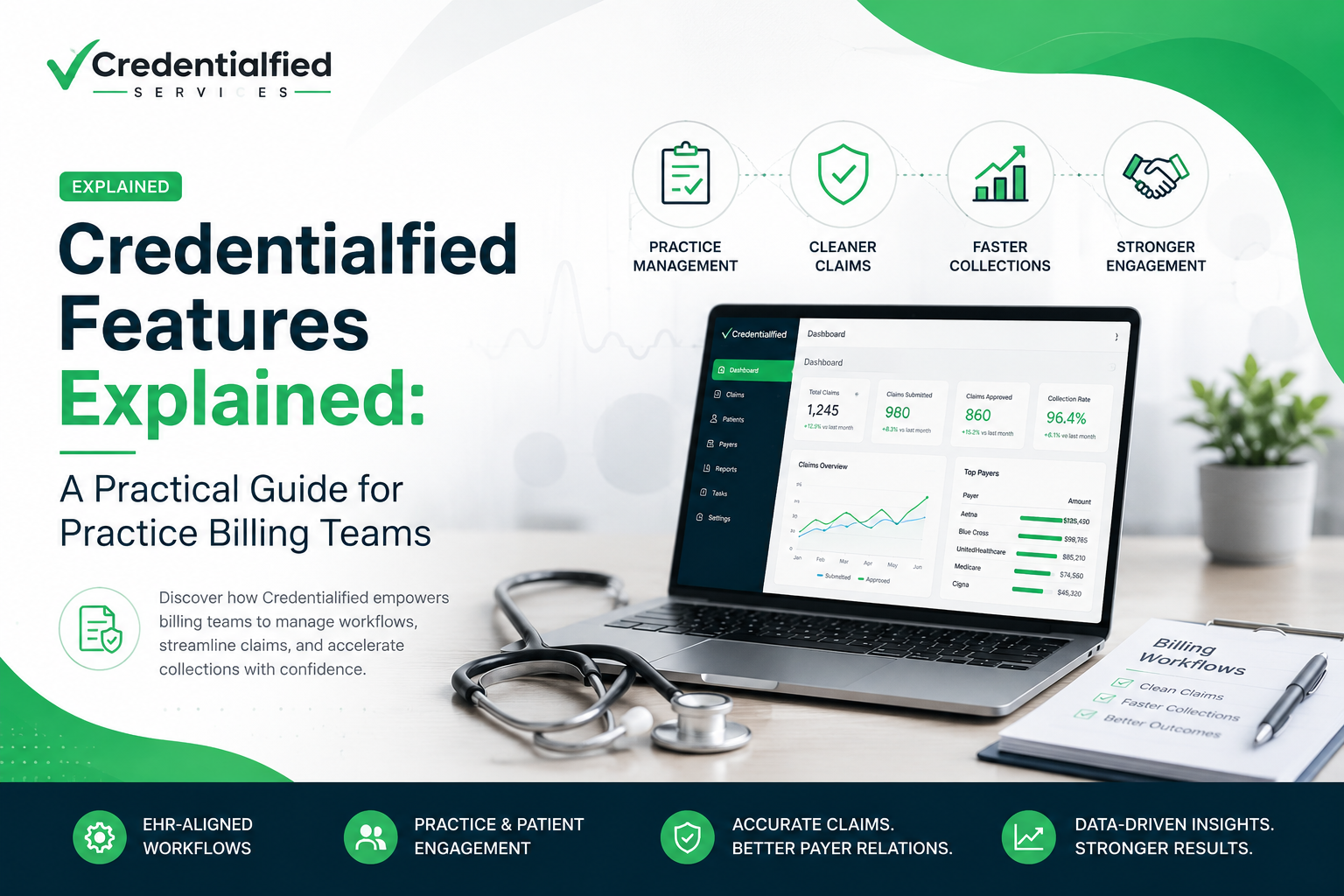
CredentialFied helps independent and multi-location practices connect clinical workflows, practice management, medical billing, credentialing, and patient engagement around one outcome: paid claims without black-box outsourcing. Features alone do not collect cash—configured workflows, payer-aware edits, and accountable follow-up do. This guide breaks down the capabilities billing teams rely on most and how CredentialFied turns them into collections results.
What CredentialFied brings together
At a high level, CredentialFied unifies:
- Practice management / billing — charge entry through collections
- Clinical documentation alignment — notes and coding that feed accurate charge capture
- Patient engagement touchpoints — intake, reminders, and payment pathways
- Credentialing + RCM handoffs — so panel status and claim accuracy move together
- Multi-location / group visibility — reporting and work queues leadership can actually use
Billing and claims capabilities practices lean on
These are the workhorses of the CredentialFied revenue cycle:
- Claims management — build, track, and submit claims across providers and sites
- Claim scrubbing & edit rules — catch coding, bundling, and payer edit issues before submission
- Eligibility verification — coverage checks that reduce reject and deny cycles
- Electronic remittance (ERA) posting — faster, cleaner payment posting and reconciliation
- AR and denial worklists — prioritized queues for outstanding claims and root-cause denials
- Centralized multi-location billing — one operating rhythm for multi-provider or multi-site groups
- Clearinghouse-ready workflows — less manual upload/download friction
- Coding support & period-close discipline — tighter month-end reporting and cash visibility
Together, these capabilities carry charge entry → scrubbing → submission → remittance → denial/AR work.
Clinical documentation that protects coding quality
Clinical tools only help revenue when documentation supports coding and charge capture:
- Specialty-aware templates and documentation patterns
- Configurable chart workflows that reduce missed charges
- Clear ICD-10 / CPT alignment before claims leave the practice
- Documentation that flows into billing without double entry where systems allow
When clinical and billing workflows stay aligned, you get fewer mismatches between what was documented and what was billed. “Integrated” still needs ownership—edits and specialty rules must be tuned to your payer mix.
Patient engagement touchpoints that protect cash
- Online payment and patient balance pathways
- Appointment reminders that reduce no-shows (and wasted slots)
- Digital intake that improves demographic accuracy
- Consent and intake forms that reduce front-end claim friction
Front-office collection points—copays, prior balances, card-on-file—are often the fastest AR wins in any practice stack.
Enterprise and reporting capabilities
Growing groups need multi-location visibility, customizable financial dashboards, and cleaner data for leadership KPIs (days in AR, denial rate, clean claim rate, net collections). Default reports rarely match a practice’s exact specialty mix—CredentialFied builds views around your targets, not generic templates.
Software vs. service: what tools alone never replace
Platforms can power eligibility, scrubbing, ERA, and worklists. Tools still do not replace:
- Payer-mix-specific edit tuning
- Denial root-cause categorization and appeal quality
- AR prioritization and productivity standards
- Credentialing/panel status alignment with claim submission
- Leadership reporting that triggers action, not just archives history
How CredentialFied turns features into collections
CredentialFied works with the systems practices already use—or runs fully managed medical billing—so features become cash outcomes. A typical engagement focuses on:
- Workflow audit — what is live vs. unused; what billing actually needs
- Edit / scrubbing rule tuning — mapped to your real payer mix and coding patterns
- Denial queue design — root-cause buckets, appeal templates, eligibility ahead of the visit
- Reporting build — dashboards around your KPIs
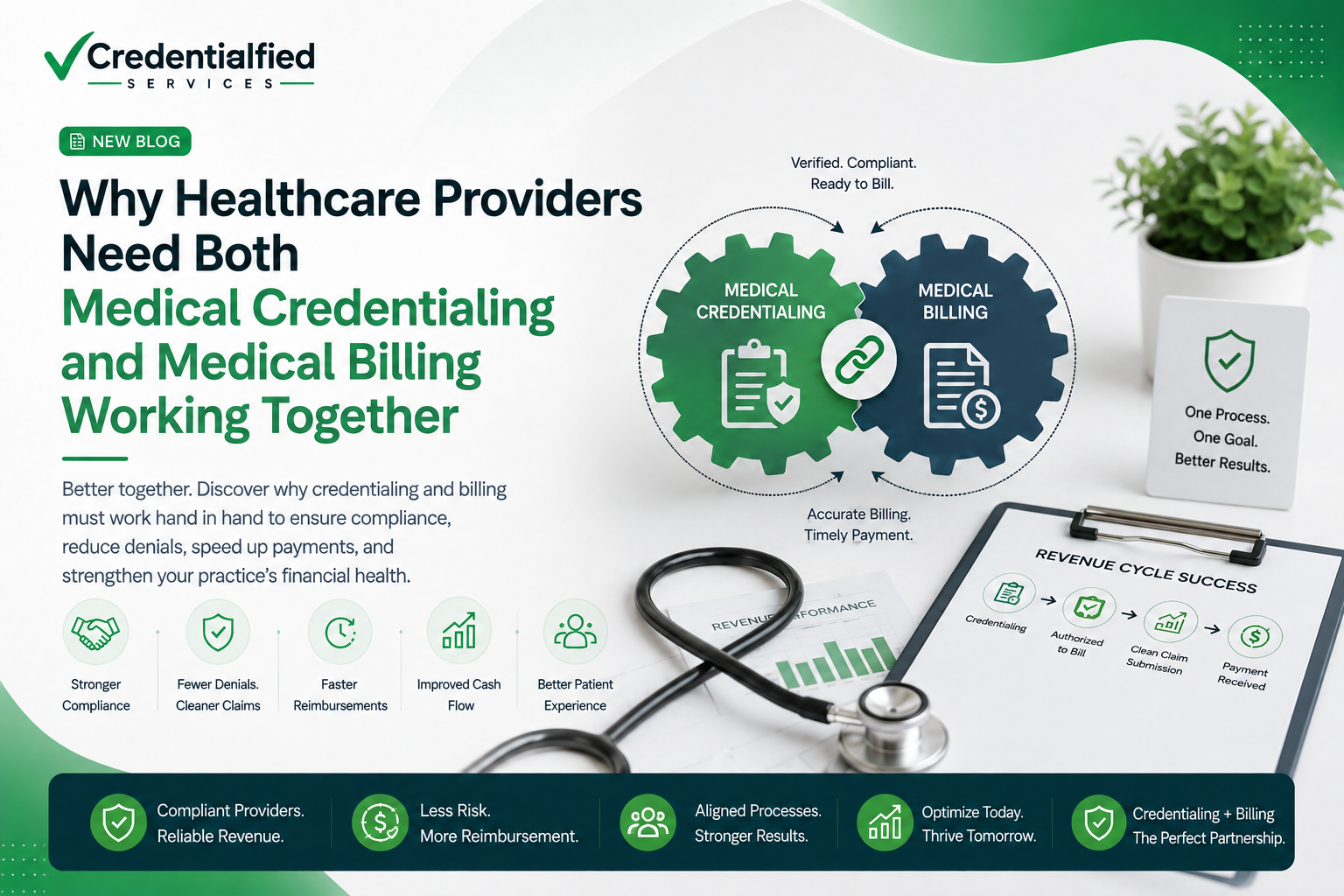
- Credentialing + billing handoffs — so enrollment gaps do not become paid-claim failures
Whether you keep billing in-house with expert oversight or outsource more of the cycle, CredentialFied’s goal is the same: cleaner first-pass claims, faster denial resolution, and visible cash KPIs.
Who this guide is for
Practice owners, office managers, and billing leads evaluating CredentialFied—or already live and still fighting denials, charge lag, or opaque aging—will get the most from a configuration-first approach plus accountable RCM process.
Learn about CredentialFied medical billing, explore credentialing and RCM services, or contact us to review your workflow against collection targets.